Grzegorz Stec
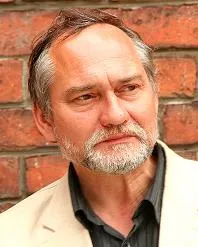
Grzegorz Stec – born in 1955 in Kraków; in 1981 he graduated from the Academy of Fine Arts in Kraków. He took his diploma in the Faculty of Graphic Arts under Prof. Włodzimierz Kunz and studied painting under Prof. Jan Świderski. He lives in Kraków and is a member of the Association of Polish Artists and Designers (ZPAP). He has had more than 50 major solo exhibitions. He has exhibited at leading art galleries in Poland (including in Kraków, Warsaw, Poznań, Gdańsk, Łódź, Katowice and Kołobrzeg) and abroad (USA, Sweden, France, Germany).
For a number of years he exhibited in the United States. From 1996 to 2002 he was artist in residence at The Society for Arts in Chicago, where his exhibitions included Letters to the Masters (1996), Exodus or Carnival? (1997) and Aqueducts of Dream (1998). From 2007 to 2009 he exhibited in New York.
He has exhibited at consular institutions: the Consulate General of the Republic of Poland in New York (2008) and the Kosciuszko Foundation in New York (2009), the Polish Institute in Leipzig (In Licht und Schatten, 2014), and Galerie Abakus in Berlin with the participation of the Polish Embassy and the Polish Institute in Berlin (2015). The artist’s most recent major exhibitions in Poland were held at Pałac Sztuki in Kraków (2012, 2015), Centrum Sztuki Współczesnej “Solvay” (2014), Centrum Kultury Żydowskiej in Kraków’s Kazimierz district (2011, 2014) and Galeria Sztuki Współczesnej Dagma Art in Katowice (2015/2016).
In 2014 Grzegorz Stec designed the set for and staged a production of Sophocles’ Antigone (Teatr MIST). The artist’s paintings have appeared on, among other things, the poster for the 6th Ludwig van Beethoven Easter Festival (2002) and in numerous book publications. TVP made a film about the artist’s work, Zadręcza mnie zapach czerni (1991, dir. Cezary Nowicki).
Grzegorz Stec is also a poet and has published two collections of poetry: Nikt tu nie szuka odpowiedzi (1999) and Melencolia (2007).
His painting occupies the space between abstraction and figuration. He works with metaphor, sign and subtle allusion.
Stec is fascinated by destruction, decay and the drama of life. These motifs have been present in his art from the very beginning (“Ukrzyżowanie”, Crucifixion). Yet the mutilation of man and the world is always counterpointed by light, which gives these paintings a spiritual dimension. Light is the protagonist of many of the artist’s works, from vertical paintings depicting luminous figures – phantoms – suspended in the air, resembling “X-rays of the soul” (Marcin Kołpanowicz), to black works in which light plays the dominant role.
The artist works spontaneously and intuitively, letting the wet paint freely chart trajectories for imagination and intuition. The painting takes shape during the first heated sessions, followed by a second phase, lasting weeks or even months, of painstaking and meticulous refinement of detail.
Stec’s art is born of the tension between the spontaneity of a subconscious vision and the ordering intellect, between a violent outburst of emotion and delicacy of form. It is marked by a richness of compositions, colours, textures and formats – from simple forms to dense horror vacui compositions, from pure, vivid colour to monochrome and even black-and-white works, from miniatures through extremely long horizontal or soaring vertical formats to large canvases.
The black paintings are the most original part of Grzegorz Stec’s oeuvre. These ascetic painterly improvisations are an attempt to visualise pure light. The artist has developed his own oil-painting technique that achieves effects close to mezzotint. These works are characterised by a wealth of delicate effects reminiscent of primordial forms of biological life, and by a surprising variety of painterly textures (“Melancholia”, “Narada”).
A reviewer of his New York exhibitions observed that Stec’s works “give the impression of painterly masterpieces, technically rich, with baroque splendour” (Czesław Karkowski).
In the context of contemporary art, Grzegorz Stec’s painting can be counted as “separate” art. Yet in it the artist also conducts a hidden dialogue with the great masters of painting, such as Bacon, Böcklin, Bosch, Bruegel the Elder, Dürer, Ensor, Goya, Grünewald, Rembrandt and Velázquez. Equally important to him are the timeless message enclosed in a work of art and mastery of craft.
Biography based on articles and reviews available at www.stec.art.pl and on Wikipedia.
Selected solo exhibitions:
-
1979 – Klub Olimp, Kraków
-
1984 – Galeria Podwawelska, Kraków
-
1985 – Galeria Mały Rynek, Kraków
-
1986 – Galeria Inny Świat, Kraków; Emigrant’s Club, Stockholm
-
1987 – Teatr Stary, Kraków
-
1988 – Galeria Inny Świat, Kraków
-
1989 – Silesian Museum, Katowice; Galeria Inny Świat, Kraków
-
1991 – Stara Galeria, Kraków; Galeria Jatki, Nowy Targ
-
1992 – Teatr Witkacego, Zakopane; Galeria Profil, Poznań
-
1993 – Galeria Inny Świat, Kraków; Stara Galeria, Kraków
-
1994 – Art Gallery, Katowice; Pati Gallery, Kraków
-
1995 – PAAS Gallery, New York; Dom Natana Spiry, Kraków
-
1996 – “Letters to the Masters”, 1112 Gallery, The Society for Arts, Chicago; “Insights”, The John G. Blank Center for the Art, Michigan City
-
(with the sculptor Adam Fedorowicz)
-
1997 – “Exodus or Carnival?”, 1112 Gallery, The Society for Arts, Chicago
-
1998 – “Aqueducts of Dream”, 1112 Gallery, The Society for Arts, Chicago
-
2002 – Galeria Centrum, Kraków
-
2004 – Beskidzka Galeria Sztuki, Szczyrk
-
2005 – Museum of the History of the City of Łódź, Łódź
-
2006 – Galeria Temporary Contemporary, Kraków; “Akwedukty snów” (Aqueducts of Dreams), Galeria Ermitaż; Royal Łazienki Museum, Warsaw; Galeria AllBoom, Warsaw
-
2007 – Galeria Pałac Vauxhall, Krzeszowice; Galleri Mitteleuropa, Stockholm; Galeria TA, Kraków; Galeria Lamelli, Kraków
-
2008 – Consulate General of the Republic of Poland, New York; Galeria Kuriera Plus, New York
-
2009 – Kosciuszko Foundation, New York
-
2010 – Centrum Sztuki Współczesnej, Kołobrzeg (with Marcin Kołpanowicz); “Oto – patrz Fryderyku” (with Krzysztof Izdebski-Cruz and Marcin Kołpanowicz),
-
Polish Baltic Philharmonic and Galeria Klucznik
-
2011 – “Pisanie światłem, pisanie mrokiem” (Writing with Light, Writing with Darkness), Centrum Kultury Żydowskiej, Kraków
-
2012 – “Jest czerń tak przezroczysta…” (There Is a Black So Transparent…), Galeria Ars Nova, Łódź; “Ciemne epitafie” (Dark Epitaphs), Pałac Sztuki of the Society of Friends of Fine Arts in Kraków
-
2013 – “POSTkarnawał” (POSTcarnival), Dwór Czeczów, Kraków;
“POSTkarnawał II”, Galeria Sztuki Batko, Ochojno;
Collegium Novum, Jagiellonian University, Kraków;
Mairie de Saint-Ouen-Marchefroy, France
-
2014 – “In Licht und Finsternis”, Polish Institute in Leipzig (Polnisches Institut Leipzig); “Wokół Antygony” (Around Antigone), Centrum Sztuki Współczesnej “Solvay”, Kraków; “W świetle, w ciemności” (In Light, in Darkness), Centrum Kultury Żydowskiej, Kraków
-
2015 – “Wokół masek i demonów” (Around Masks and Demons), Jama Michalika, Kraków; “Melancholie und Maskarade”, Galerie Abakus, Berlin
Translated from Polish.